Which Programming Language for Which Project?

As an application developer, I have to decide for each project which programming language is best for implementing it. Here too, I sometimes have to make compromises; if I don’t master a programming language optimally, I’ll also take the second choice, but it shouldn’t be an obstacle.
On IRC-Coding.de there are already numerous articles about JavaScript frameworks and also about numerous Python frameworks such as FastAPI. In this article, I want to provide a brief overview of which programming language could be interesting for different projects, and most importantly why.
The 15 Most Important Programming Languages in 2026 and What You Use Them For
1. Python – The All-Rounder for AI, Data Science & Automation
Currently I work a lot with Python; I’m using Fast-API to write an intranet exclusively with Python. It feels pleasant and I don’t notice any limitations, whether it’s document processing or API queries. For public websites, I might reconsider the concept, but nowadays there’s no way around Python. Especially for AI projects, whether it’s preparing data for your own or external LLMs or integrating e.g. Ollama, AnythingLLM, WebUI into your own framework like Streamlit or FastAPI.
For which projects? Machine learning, AI prototypes, data analysis, data pipelines, backend APIs, automation scripts, MLOps.
Why Python? In 2026, Python is uncontested the number 1, according to the PYPL Index with a market share of around 36 % worldwide.1 Over 80 % of all AI and machine learning projects are implemented in Python.2 This is due to the huge ecosystem: With libraries like TensorFlow, PyTorch, Pandas, FastAPI or Scikit-learn, you can cover everything from data import to a finished API endpoint, in one language, with one community.
On top of that: The syntax is beginner-friendly, the ecosystem grows by ~47 % annually, and over 178,000 active packages are available on PyPI.3 In short: If you work with data, AI or automation, there’s no way around Python in 2026.
Typical Tools: FastAPI, Django, Flask, Pandas, NumPy, LangChain, Hugging Face Transformers
Python is absolutely rewarding. At work, I quickly built an AI interface and on the same day a fully functional business card scanner (visiting card scanner) with OpenCV and LLM.
Want to query data from APIs? Document government IPs? Whatever, a 15-100 line script in Python and you have your database ready.
Book Recommendation:
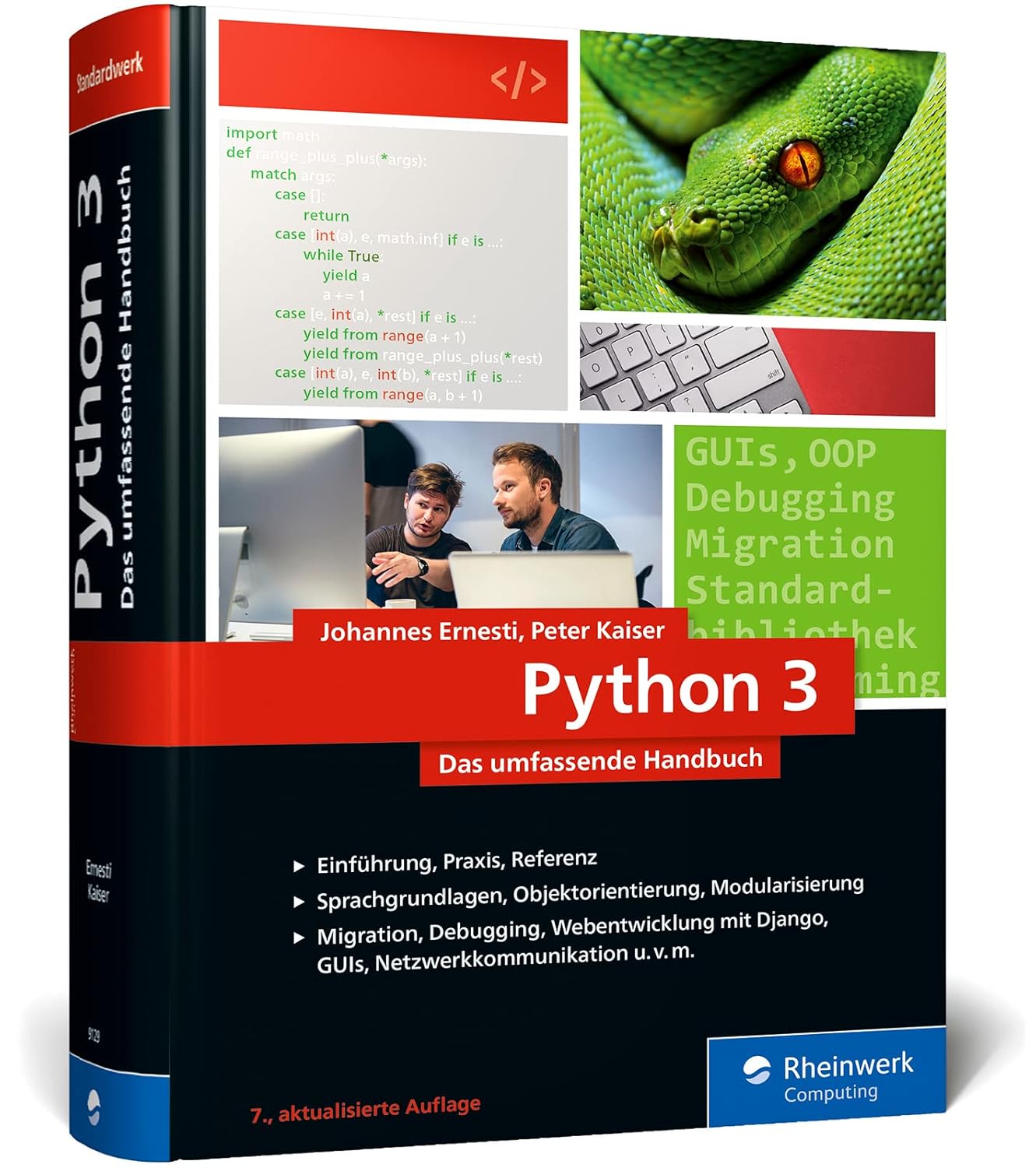
Python 3: Das umfassende Handbuch
Bei Amazon ansehenAffiliate-Link: Bei einem Kauf erhalten wir möglicherweise eine Provision.
2. JavaScript – The Heart of the Web
For which projects? Web frontends, interactive UIs, browser applications, rapid prototypes.
Why JavaScript? JavaScript runs in every browser – without installation, without configuration. Anyone building a website with dynamic content, animations or user interactions can’t avoid JS. More than 60 % of professional developers worldwide use JavaScript as their primary language.4
With frameworks like React, Vue or Svelte, you can build complex Single-Page Applications (SPAs) that feel like native apps.
Typical Tools: React, Vue, Svelte, Vite, Next.js, Remix
3. TypeScript – JavaScript, but with a Safety Net
Normally I would rank TypeScript at number 2, but programmers will understand why I place it under JavaScript. Those who work a lot with C# etc. will have learned to love type safety. Especially software testing runs much more smoothly. If JavaScript, then you should master TypeScript.
For which projects? Large web projects, team development, enterprise frontend, full-stack applications.
Why TypeScript? TypeScript is a type-safe extension of JavaScript. If you’re working alone on a weekend project, you might not need it. But once a team grows, codebases expand and bugs become more expensive, TypeScript is the de facto standard in 2026.5
The compiler catches errors before startup, which saves hours in debugging. And because TypeScript compiles to JavaScript, compatibility is maintained.
Typical Tools: TypeScript + React, Angular, Next.js, tRPC, Zod
4. Node.js – JavaScript on the Server
For which projects? REST APIs, microservices, real-time applications (chat, notifications), backend for SPAs.
Why Node.js? Node.js makes it possible to use JavaScript on the server side as well, a huge advantage for teams already using JS in the frontend. The ecosystem via npm is the largest package ecosystem in the world. And thanks to its event-loop architecture, Node.js is particularly strong for I/O-intensive applications like real-time chats or streaming APIs.
On IRC-Coding.de we already have several articles about Node.js frameworks – a good starting point is, for example, our article on Fastify and Express.
Typical Tools: Express, Fastify, NestJS, Prisma, Socket.io
5. Rust – Security and Performance without Compromise
For which projects? System software, embedded systems, WebAssembly modules, security-critical infrastructure, CLI tools.
Why Rust? In 2026, Rust was once again voted the “most admired language” among developers.6 The reason: Rust offers C/C++-like performance, but with an ownership system that excludes memory errors at compile-time, without a garbage collector. The US NIST explicitly classifies Rust as a safer systems programming language.7
That sounds like a lot of theory, but in practice it means: fewer crashes, fewer security vulnerabilities, more confidence in critical software. If you’re building system services, CLI tools or WebAssembly components, you should seriously consider Rust in 2026.
Typical Tools: Cargo, Tokio (async), Axum, wasm-bindgen, ripgrep
6. Go – Simple, Fast, Cloud-Native
For which projects? Microservices, cloud backends, DevOps tools, API servers, Kubernetes operators.
Why Go? Go was developed by Google and is optimized for exactly one thing: fast, maintainable server software. The language is deliberately simple, no generics overload, no complex inheritance hierarchies. What you write runs fast and is easy to read.
In the cloud world, Go is established: Kubernetes, Docker and Terraform are all written in Go. If you’re building microservices or DevOps tooling, Go is an excellent choice in 2026.8
Typical Tools: Gin, Echo, Fiber, gRPC, Cobra
7. Java – Enterprise Veteran with a Comeback
For which projects? Enterprise applications, banking backends, large systems, Android (legacy), Spring microservices.
Why Java? Java has lost popularity in recent years, but you shouldn’t write it off. With Java 21, Spring Boot 3 and GraalVM, the ecosystem is more modern and cloud-ready than ever before.9 Especially in enterprise environments – insurance companies, banks, public authorities – Java is deeply rooted and will remain so for a long time.
If you’re aiming for a career in large enterprises or working on legacy systems, you can’t get around Java knowledge.
Typical Tools: Spring Boot, Quarkus, Micronaut, Hibernate, Maven/Gradle
8. Kotlin – The Modern Java for Android & Backend
For which projects? Android apps, JVM backend alternatives to Java, cross-platform with Kotlin Multiplatform.
Why Kotlin? Kotlin is Google’s official language for Android development and offers everything Java can do, but with significantly less boilerplate and modern syntax. Null-safety is built-in, coroutines make asynchronous code readable, and JVM compatibility means: you can continue using Java libraries.
With Kotlin Multiplatform, you can even share logic between Android, iOS, and Web – a growing field.
Typical tools: Jetpack Compose, Ktor, Kotlin Multiplatform, Android Studio

9. Swift – Native Development in the Apple Ecosystem
For which projects? iOS apps, macOS applications, watchOS, tvOS, SwiftUI interfaces.
Why Swift? The entire Apple ecosystem runs on Swift in 2026. The language is concise, safe (thanks to optionals and strong typing), and significantly easier to learn than its predecessor Objective-C.10 Anyone building native Apple apps should master Swift – there’s hardly an alternative if you need access to the latest Apple APIs.
Typical tools: SwiftUI, UIKit, Xcode, Combine, Swift Package Manager
10. PHP – The Veteran of Web Development
For which projects? Content management systems, WordPress themes/plugins, classic websites, e-commerce.
Why PHP? PHP runs on 72% of all web servers worldwide and is the foundation of WordPress, which in turn powers around 43% of all websites.11 For new large-scale projects, PHP isn’t the first choice – but if you work with WordPress or existing PHP systems, or if you maintain client CMS-based sites, you can’t avoid PHP.
Modern PHP frameworks like Laravel have also significantly upgraded the language.
Typical tools: Laravel, Symfony, WordPress, Composer, Eloquent ORM
Laravel! The PHP Framework That Still Dominates the Market
No matter what many say about PHP, in the end it has established itself, and with Laravel you can still land many jobs and projects today.
Why Laravel is so valuable as an application developer or in the market: Laravel is the most widely used PHP framework worldwide in 2026 and has established itself as the standard for modern PHP development. As an application developer, Laravel is so valuable because it enables an enormously productive workflow: With Eloquent ORM, you work with databases like objects, the Blade templating engine makes frontend integration intuitive, and the integrated Artisan CLI automates repetitive tasks. Especially in the freelancer market and at agencies, Laravel is in extreme demand because projects can be implemented faster than with plain PHP or other frameworks. The Laravel community is huge, the ecosystem with tools like Laravel Nova, Laravel Horizon, and Laravel Vapor covers everything from admin panels to serverless deployment. Anyone implementing PHP projects while wanting to optimize time, costs, and code quality can’t get around Laravel in 2026. The job market also reflects this: Laravel developers are more in demand than ever, and the framework is continuously being developed to meet modern requirements.
11. Dart / Flutter – Cross-Platform from One Source
For which projects? Mobile apps (iOS + Android), progressive web apps, desktop applications – all from a single codebase.
Why Dart/Flutter? Flutter from Google allows you to build native-like apps for iOS, Android, Web, and Desktop with one codebase. Dart is the accompanying language – quick to learn, well-documented. If you don’t want to maintain separate design systems for each platform, Flutter saves you enormous time.12
Typical tools: Flutter, Dart, pub.dev, Riverpod, Hive
12. SQL – The Language of Data
For which projects? Every project that stores, queries, or manages data – so almost every project.
Why SQL? SQL isn’t a “new” language – but it’s as indispensable in 2026 as ever. Databases are the heart of every software.13 Anyone who masters SQL can efficiently query, optimize, and manage data from relational databases like PostgreSQL, MySQL, or SQLite.
No framework in the world replaces a good understanding of SQL – ORM or not.
Typical tools: PostgreSQL, MySQL, SQLite, Supabase, Prisma, DuckDB
13. C++ – Performance Where It Really Counts
For which projects? Game engines, embedded systems, high-frequency trading, operating system components, 3D software.
Why C++? C++ remains in the top 5 of the TIOBE Index in 2026.14 Where maximum performance and direct memory access are crucial – game engines like Unreal, real-time systems, trading software – C++ is still the first choice. It’s not a beginner-friendly language, but for systems where every millisecond counts, there are hardly any alternatives.
Typical tools: Unreal Engine, CMake, Qt, LLVM, OpenCV
14. Ruby (on Rails) – Fast to Product
For which projects? Startups, MVPs, CRUD web applications, rapid prototypes.
Why Ruby? Ruby on Rails was the go-to framework for startups for years – and for good reason: with Rails, CRUD applications can be built extremely quickly because many conventions are already built-in. For startups that want to launch an MVP quickly, Rails is still a solid choice in 2026.
Typical tools: Ruby on Rails, Hotwire, Sidekiq, RSpec, Devise
15. WebAssembly (Wasm) – The Future of the Browser
For which projects? Performance-intensive browser applications, image and video editing in the browser, portable runtimes, serverless functions.
Why WebAssembly? WebAssembly isn’t a direct competitor to JavaScript – it’s a complement. With Wasm, you can run code written in Rust, C++, or Go directly in the browser – with near-native performance.15 This opens the door to applications that were previously only conceivable as desktop software: video editing, CAD, emulators.
Typical tools: wasm-bindgen, Emscripten, Wasmtime, WASI, Spin (Fermyon)
🔀 Mixed Projects – When One Language Isn’t Enough
In practice, few projects are cleanly limited to one language. Here are a few typical combinations:
Full-Stack Web Application
TypeScript (React) + Node.js (Express/Fastify) + PostgreSQL (SQL)
Frontend, backend, and database – all in one language (TypeScript). No context switching, shared types thanks to tRPC or GraphQL, easy onboarding for new developers.
AI-Powered Web App
Python (FastAPI / LangChain) + TypeScript (React) + PostgreSQL
The AI backend in Python because libraries like Hugging Face or LangChain are native there. The UI in React/TypeScript because that offers the best DX in the frontend. The data in PostgreSQL with pgvector for embeddings.
Mobile App with Shared Logic
Kotlin Multiplatform + Swift (iOS-specific) + Ktor (Backend)
Write business logic once in Kotlin, use it directly on Android, integrate on iOS – native UI layer in Swift (iOS) or Jetpack Compose (Android) respectively.
Cloud-native Microservice System
Go (Services) + Python (ML-Service) + TypeScript (API-Gateway) + SQL + Kafka
Each service uses the language it’s optimized for. Go for fast, resource-efficient services. Python for the ML-inference service. TypeScript for the gateway with BFF pattern. This isn’t over-engineering – this is the result of deliberate technological decisions.
High-Performance Desktop/Game Application
C++ (Engine/Core) + Python (Scripting) + SQL (local data)
Many game engines (e.g., Unreal) use C++ for the performance-critical engine, but allow Python or Lua scripting for game logic. A proven combination for years.
There is no universally “best” programming language – there is the best language for the respective context. As a developer, it’s worth having a broad perspective: master one primary language, build understanding for two or three others, and know when to use which tool.
In 2026, the strategically most important investments in my view are:
- Python for everything around AI, data, and automation
- TypeScript/JavaScript for web and full-stack
- Rust or Go as a second systems language
- SQL – always and everywhere
On IRC-Coding.de I’ll publish further, more in-depth articles on most of these languages and frameworks. Check back regularly!
Sources
Frequently Asked Questions
Which programming language should I learn as a beginner in 2026?
For web development, I recommend JavaScript/TypeScript – you can immediately see visible results in the browser. For data science and AI, Python is the best starting point: the syntax is clear, the community is huge, and the practical application is immediately valuable. Both are absolutely future-proof decisions in 2026.
Do I have to master multiple programming languages?
You don’t need to master languages perfectly – but a basic understanding of more than one language opens many doors for you. In practice, you often work with stacks like TypeScript + SQL or Python + Bash. If you only know one language, you often can’t combine the tools meaningfully. Depth in one language + breadth across several is the goal.
Is Python really as popular as claimed?
Yes. According to the PYPL Index, Python held a worldwide market share of around 36% in April 2026, making it the most sought-after programming language globally. On GitHub, Python has even surpassed JavaScript as the most-used language – driven by AI and data science projects.
Why should I learn Rust if C++ can do the same?
Rust offers similar performance to C++, but eliminates an entire class of memory errors (dangling pointers, buffer overflows, data races) through the ownership system at compile time – without a garbage collector. The US National Institute of Standards and Technology (NIST) explicitly classifies Rust as a safer alternative for systems programming. For new projects in the systems domain, Rust is often the smarter choice in 2026.
When does it make sense to combine multiple languages in a project?
Whenever different parts of the system have different requirements. Typical: Python for the AI service, TypeScript for the frontend and API layer, Go for high-frequency microservices, SQL for data storage. The art is to define the boundaries between the parts cleanly – e.g., via REST or gRPC interfaces – so each language stays in its area of strength.
Is PHP still relevant?
Yes – but with limitations. PHP runs on about 72% of all web servers and forms the basis of WordPress. For new, independent projects, I would lean toward Node.js, Go, or Python in 2026. But if you work in the WordPress ecosystem or maintain existing PHP projects, you need PHP knowledge.
What is WebAssembly and do I really need it?
WebAssembly (Wasm) allows you to write code in languages like Rust or C++ and run it directly in the browser with near-native performance. For most web apps, you don’t need it – JavaScript is perfectly sufficient. But if you’re building performance-intensive applications in the browser (video editing, CAD, emulators), Wasm is a real game-changer tool in 2026.
Go or Node.js for a new backend?
That depends on your team and requirements. Node.js is ideal if your team already knows JavaScript/TypeScript and you want to iterate quickly. Go is the better choice if performance, low resource usage, and simple deployments (single binary) are priorities – especially for microservices in cloud environments.
Recommended Reading: Programming Languages
Keine Bücher für Kategorie "programming-languages" gefunden.
Should you only choose between these 15 programming languages?
No, of course not. But let’s be honest, all major projects are built on the usual suspects. If you’ve read further articles here, I’m also interested in TCL, C, Perl, etc., and recently found an old dusty CURL (programming language) book and wrote an article about it: https://www.irc-coding.de/programmiersprache-multiparadigmen-curl-surge-rte-ide-
Some of these languages were unfamiliar to me, or I had little experience with them. For many years I’ve wanted to dive deeper into “Ada,” but I lack the time… and sometimes perhaps the motivation ;)
25 More Interesting Programming and Scripting Languages
16. TCL – Tool Command Language
For which projects? Embedded Systems, Testing-Frameworks, Rapid Prototyping, Internet Relay Chat (IRC) Bots. TCL is particularly strong in automation and as an embedding language in C applications.
17. Perl – The Swiss Army Knife Language
For which projects? System administration, Text processing, Bioinformatics, Legacy web applications, Internet Relay Chat (IRC) Scripting. Perl excels at regular expressions and file processing.
18. C – The Systems Programming Classic
For which projects? Operating systems, Embedded Systems, Performance-critical applications, Hardware-level programming, Compiler development. C remains the foundation of modern systems.
19. Bash – Unix Shell Scripting
For which projects? System administration, DevOps automation, CI/CD pipelines, Server management, Backup scripts. Bash is indispensable for Linux/Unix systems.
Bash in detail: I asked myself why I didn’t include Bash in the top 10. As a Linux user and server administrator, I use many Bash scripts. Bash is the standard shell on almost all Linux systems and perfect for quick automation tasks. Bash is particularly strong in system administration, where you can access Linux commands and tools directly. CI/CD pipelines like GitHub Actions or GitLab CI use Bash extensively for build and deployment scripts.
Bash vs. Python: In recent years, however, I’ve increasingly used Python for scripting tasks because it’s sometimes more fun and the code base is better to maintain. Python has better error handling, modern data structures, and is cross-platform. But for quick, direct system tasks, Bash is often still the better choice - especially when you’re already working in the shell and want to quickly automate something.
Typical use cases: Backup scripts, Log rotation, Server monitoring, File processing, Docker container management, Git hooks.
20. Lua – Lightweight Embedding Language
For which projects? Game scripting (Roblox, World of Warcraft), Embedded Systems, Configuration files, Prototyping. Lua is extremely small and fast.
21. R – Statistics and Data Science
For which projects? Statistical analysis, Scientific research, Data visualization, Academic publications. R is the standard in statistics.
Why R is losing importance: R was once the undisputed number one in statistics, but Python has caught up significantly. The main reason: Python combines data science with general programming in one language. Today, if you develop a machine learning model, you also want a web API and database connection – that works seamlessly with Python (FastAPI, Pandas, scikit-learn), but with R requires external tools. R remains leading in academic statistics and specialized statistical analysis, particularly for complex statistical tests and visualizations where specialized packages exist.
22. Scala – Functional on the JVM
For which projects? Big Data (Apache Spark), Distributed systems, Functional programming, Enterprise applications. Scala combines OO and functional paradigms.
What exactly is Scala: Scala is a modern programming language on the Java Virtual Machine that combines object-oriented and functional programming. The name stands for “scalable language” – it grows with your project’s requirements. Scala has a very expressive syntax with features like Pattern Matching, Higher-Order Functions, and immutable Collections. The biggest advantage: full access to the Java ecosystem while using a modern language. In the big data world, Scala is leading because Apache Spark is written in Scala. However, Scala has a steep learning curve and the community is smaller than Java or Kotlin.
23. Elixir – Erlang Ecosystem
For which projects? Real-time systems, Chat applications, IoT, Fault-tolerant systems. Elixir on the BEAM-VM is extremely robust.
24. Haskell – Pure Functional Programming
For which projects? Academic research, Compiler development, Formal verification, Complex algorithms. Haskell promotes correct code.
25. F# – Functional .NET Language
For which projects? Data Science, Financial analysis, Web backend with ASP.NET, Functional programming in the .NET ecosystem.
F# in the .NET ecosystem: F# is still an important topic in the .NET space, particularly for functional programming and data science. Microsoft actively supports F# and it’s part of the official .NET stack. The advantage: F# has full access to all .NET libraries while offering modern functional syntax. F# is popular in the financial sector for quantitative analysis and risk models. F# is also used in web backends with ASP.NET Core, especially for complex business logic that benefits from functional programming. The community is smaller than C#, but very engaged and high quality.
26. Clojure – Lisp on the JVM
For which projects? Data Processing, Web applications, REPL-based development, Functional programming. Clojure offers dynamic typing with JVM performance.
27. Ada – Safety-Critical Systems
For which projects? Aerospace, Military systems, Railway control, Safety-critical software. Ada is designed for reliability.
Ada in detail: Ada is a programming language specifically developed for safety-critical systems. It is named after Ada Lovelace, the world’s first programmer. Ada was commissioned by the US military and is known for its strict typing, built-in error checking, and support for parallel programming. Ada is particularly strong in real-time systems and embedded systems, where errors can have catastrophic consequences. The language enforces many good programming practices through its design and makes it difficult to write faulty code. Despite its strengths, Ada is rarely used in new projects because the learning curve is steep and more modern alternatives like Rust offer similar security guarantees with a larger community.
28. Fortran – Scientific Computing
For which projects? Numerical simulations, Weather forecasting, Scientific calculations, High-Performance Computing. Fortran dominates in the HPC field.
29. COBOL – Legacy Systems
For which projects? Banking and insurance systems, Government applications, Legacy migration. COBOL still runs in many critical systems.
COBOL today: COBOL (Common Business-Oriented Language) is one of the oldest programming languages and was specifically developed for business applications. Today, COBOL still runs in countless critical systems: Banks process trillions of dollars daily through COBOL systems, Insurance companies calculate policies, Governments manage social benefits. The problem: There are hardly any COBOL developers left, many are retired. This leads to a “COBOL crisis” – companies desperately search for developers who can maintain or modernize legacy systems. COBOL is extremely stable and reliable, but development is cumbersome and not modern. For new projects, no one would choose COBOL, but for maintaining critical systems, it’s indispensable.
30. Lisp – The Oldest High-Level Language
For which projects? AI research, Emacs extensions, symbolic computations, academic teaching. Lisp influenced many modern languages.
How important is Lisp still: Lisp is not a mainstream language in 2026, but its influence is immense. Many concepts that we take for granted today come from Lisp: garbage collection, higher-order functions, recursion, dynamic typing. Even the REPL (Read-Eval-Print Loop) comes from Lisp. In AI research, Lisp is still relevant, especially for symbolic AI and expert systems. Emacs, one of the most powerful editors, is completely written in Lisp and extensible. In academic teaching, Lisp is used to convey fundamental programming concepts. For new commercial projects, Lisp is rarely chosen, but for prototyping and research it is unbeatable in its flexibility.
31. Prolog – Logic Programming
For which projects? Expert systems, AI research, natural language processing, rule-based systems. Prolog works with facts and rules.
32. Erlang – Telecommunications Language
For which projects? Telecommunications systems, chat servers, real-time applications, highly available systems. Erlang is optimized for concurrency.
33. Smalltalk – Pioneer of OOP
For which projects? Education, rapid prototyping, live programming, object-oriented research. Smalltalk influenced modern OOP languages.
34. Objective-C – Apple’s Predecessor
For which projects? Legacy iOS applications, macOS software, legacy systems, migration to Swift. Objective-C is still used in many Apple projects.
35. PowerShell – Windows Automation
For which projects? Windows system administration, cloud management (Azure), DevOps, Windows-specific automation. PowerShell is object-oriented.
36. Raku – Perl’s Successor
For which projects? Text processing, linguistics, prototyping, modern scripting applications. Raku (formerly Perl 6) offers modern features.
37. Zig – Systems Programming Rethought
For which projects? Systems programming, embedded systems, game development, performance-critical applications. Zig is simpler than C/Rust.
38. Nim – Python-like Systems Language
For which projects? Systems programming, game development, embedded systems, scientific computing. Nim combines Python syntax with C performance. Actually, I’ve heard or read very little about NIM, but the research made me curious.
39. V – Fast Systems Language
For which projects? Systems development, web backend, CLI tools, game development. V is simple, fast, and safe like Go/Rust.
40. Crystal – Ruby-like Performance
For which projects? Web applications, microservices, CLI tools, high-performance scripting. Crystal offers Ruby syntax with C performance.
41. Deno – Secure JavaScript Runtime
For which projects? Serverless functions, web backend, CLI tools, secure web applications. Deno is a modern alternative to Node.js with integrated security features.
Deno in detail: Deno was developed by Ryan Dahl (the original Node.js creator) to correct the mistakes of Node.js. Deno has TypeScript support built in, is secure by default (no file access without explicit permission), and has a modern standard ecosystem. Deno is particularly interesting for serverless functions and secure web applications. The choice between Node.js and Deno often depends on whether you need existing npm packages (Node.js) or prioritize security and modern features (Deno).
42. Bun – Ultrafast JavaScript Runtime
For which projects? High-performance web backend, build tools, testing frameworks, fast CLI applications. Bun is an extremely fast JavaScript runtime.
Bun in detail: Bun is a relatively new JavaScript runtime optimized for speed. Bun is up to 3x faster than Node.js on startup and up to 2x faster on execution. Bun is particularly interesting for build tools and testing frameworks where speed is critical. Bun is also a package manager and bundler in one. The learning curve is shallow since Bun is largely Node.js-compatible. For new projects where performance is critical, Bun in 2026 is a serious alternative.
43. MATLAB – Engineering and Research
For which projects? Engineering sciences, scientific simulations, signal processing, academic research. MATLAB is the standard in many technical disciplines.
MATLAB today: MATLAB is a commercial programming language and development environment for numerical computations. MATLAB is particularly leading in engineering sciences, signal processing, and academic research. The language has integrated tools for plotting, simulations, and data analysis. Python with libraries like NumPy and SciPy has taken much of MATLAB’s market share, but MATLAB remains strong in industry and universities, especially with specialized toolboxes and Simulink integration.
44. Mojo – Python for AI and High Performance
For which projects? AI/ML development, high-performance computing, Python extensions, scientific computing. Mojo is an emerging language for AI development.
Mojo in detail: Mojo is a relatively new language from Modular AI, specifically designed for AI/ML development. Mojo combines the simple syntax of Python with the performance of C/C++. Mojo is particularly interesting for developers using Python for machine learning but needing more performance. Mojo is still in development but has already received much attention in the AI community. For new AI projects building on Python but requiring more performance, Mojo is a language to keep an eye on.
Are there any noteworthy languages missing here? Then write me …