Algorithmen Grundlagen: Komplexitätsanalyse, Big-O-Notation, Such- & Sortieralgorithmen

Dieser Beitrag ist eine umfassende Einführung in die Algorithmen Grundlagen – inklusive Komplexitätsanalyse, Big-O-Notation, Suchalgorithmen und Sortieralgorithmen mit praktischen Beispielen.
In a Nutshell
Algorithmen sind schrittweise Anweisungen zur Problemlösung. Big-O-Notation beschreibt ihre Komplexität, Suchalgorithmen finden Elemente, Sortieralgorithmen ordnen Daten.
Kompakte Fachbeschreibung
Algorithmen sind wohldefinierte, endliche Anweisungsfolgen zur Lösung eines Problems. Sie sind die Grundlage der Informatik und Softwareentwicklung.
Komplexitätsanalyse:
- Zeitkomplexität: Anzahl der Operationen als Funktion der Eingabegröße
- Speicherkomplexität: Benötigter Speicherplatz
- Big-O-Notation: Obere Schranke der Komplexität
- Best/Average/Worst Case: Verschiedene Laufzeitszenarien
Big-O-Notation (wichtigste):
- O(1): Konstante Zeit
- O(log n): Logarithmische Zeit
- O(n): Lineare Zeit
- O(n log n): Linearithmische Zeit
- O(n²): Quadratische Zeit
- O(2ⁿ): Exponentielle Zeit
Prüfungsrelevante Stichpunkte
- Algorithmen: Wohldefinierte Anweisungsfolgen zur Problemlösung
- Big-O-Notation: Mathematische Beschreibung der Komplexität
- Zeitkomplexität: Anzahl der Operationen abhängig von Eingabegröße
- Suchalgorithmen: Linear Search (O(n)), Binary Search (O(log n))
- Sortieralgorithmen: Bubble Sort (O(n²)), Quick Sort (O(n log n))
- Best/Worst/Average Case: Verschiedene Laufzeitszenarien
- IHK-relevant: Grundlage für effiziente Softwareentwicklung
Kernkomponenten
- Algorithmus-Konzept: Eingabe, Verarbeitung, Ausgabe
- Komplexitätsanalyse: Zeit- und Speicherplatzbedarf
- Big-O-Notation: Asymptotische Analyse
- Suchalgorithmen: Lineare und binäre Suche
- Sortieralgorithmen: Verschiedene Sortierstrategien
- Datenstrukturen: Arrays, Listen, Bäume, Graphen
- Rekursion: Selbstaufrufende Algorithmen
- Divide and Conquer: Problemlösung durch Teilung
Praxisbeispiele
1. Big-O-Notation und Komplexitätsanalyse
import java.util.*;

public class Komplexitaetsanalyse {

    // O(1) - Konstante Zeit
    public int getFirstElement(int[] array) {
        if (array.length == 0) {
            throw new IllegalArgumentException("Array ist leer");
        }
        return array[0];  // Immer eine Operation
    }

    // O(n) - Lineare Zeit
    public int findMax(int[] array) {
        if (array.length == 0) {
            throw new IllegalArgumentException("Array ist leer");
        }

        int max = array[0];
        for (int i = 1; i < array.length; i++) {  // n Operationen
            if (array[i] > max) {
                max = array[i];
            }
        }
        return max;
    }

    // O(n²) - Quadratische Zeit
    public void printPairs(int[] array) {
        for (int i = 0; i < array.length; i++) {        // n Schleifen
            for (int j = 0; j < array.length; j++) {    // n Schleifen
                System.out.println(array[i] + ", " + array[j]);
            }
        }
        // Gesamt: n * n = n² Operationen
    }

    // O(log n) - Logarithmische Zeit
    public int powerOfTwo(int n) {
        int result = 1;
        while (n > 0) {  // log₂(n) Schleifendurchläufe
            result *= 2;
            n /= 2;
        }
        return result;
    }

    // O(n log n) - Linearithmische Zeit
    public void mergeSort(int[] array) {
        if (array.length <= 1) {
            return;
        }

        int mid = array.length / 2;
        int[] left = Arrays.copyOfRange(array, 0, mid);
        int[] right = Arrays.copyOfRange(array, mid, array.length);

        mergeSort(left);    // O(log n) Rekursionstiefe
        mergeSort(right);

        merge(array, left, right);  // O(n) für jeden Merge
    }

    private void merge(int[] result, int[] left, int[] right) {
        int i = 0, j = 0, k = 0;

        while (i < left.length && j < right.length) {
            if (left[i] <= right[j]) {
                result[k++] = left[i++];
            } else {
                result[k++] = right[j++];
            }
        }

        while (i < left.length) {
            result[k++] = left[i++];
        }

        while (j < right.length) {
            result[k++] = right[j++];
        }
    }

    // O(2ⁿ) - Exponentielle Zeit
    public int fibonacci(int n) {
        if (n <= 1) {
            return n;
        }
        return fibonacci(n - 1) + fibonacci(n - 2);  // 2ⁿ Aufrufe
    }

    // Komplexitätsanalyse mit Zeitmessung
    public void analyzeComplexity() {
        int[] sizes = {100, 1000, 10000, 100000};

        System.out.println("=== Komplexitätsanalyse ===");
        System.out.println("Größe\tO(1)\tO(n)\tO(n²)\tO(log n)");

        for (int size : sizes) {
            int[] array = new int[size];

            // Array mit Zufallszahlen füllen
            Random random = new Random();
            for (int i = 0; i < size; i++) {
                array[i] = random.nextInt(1000);
            }

            // O(1) messen
            long start = System.nanoTime();
            getFirstElement(array);
            long o1Time = System.nanoTime() - start;

            // O(n) messen
            start = System.nanoTime();
            findMax(array);
            long onTime = System.nanoTime() - start;

            // O(n²) messen (nur für kleine Arrays)
            long on2Time = 0;
            if (size <= 1000) {
                start = System.nanoTime();
                printPairs(array);
                on2Time = System.nanoTime() - start;
            }

            // O(log n) messen
            start = System.nanoTime();
            powerOfTwo(size);
            double olognTime = System.nanoTime() - start;

            System.out.printf("%d\t%d\t%d\t%d\t%.0f%n",
                             size, o1Time, onTime, on2Time, olognTime);
        }
    }

    public static void main(String[] args) {
        Komplexitaetsanalyse analyse = new Komplexitaetsanalyse();

        // Komplexitätsanalyse
        analyse.analyzeComplexity();

        // Big-O Demonstration
        System.out.println("\n=== Big-O Demonstration ===");
        demonstrateBigO();

        // Rekursion vs Iteration
        System.out.println("\n=== Rekursion vs Iteration ===");
        compareRecursionIteration();
    }

    private static void demonstrateBigO() {
        int n = 1000;
        Komplexitaetsanalyse demo = new Komplexitaetsanalyse();

        System.out.println("Demonstration mit n = " + n);

        // O(1) Beispiel
        int[] array = {1, 2, 3, 4, 5};
        System.out.println("O(1) - Erstes Element: " + demo.getFirstElement(array));

        // O(n) Beispiel
        int[] largeArray = new int[n];
        for (int i = 0; i < n; i++) {
            largeArray[i] = i;
        }
        System.out.println("O(n) - Maximum: " + demo.findMax(largeArray));

        // O(log n) Beispiel
        System.out.println("O(log n) - 2^" + n + " = " + demo.powerOfTwo(n));

        // O(n log n) Beispiel
        int[] sortArray = new int[100];
        Random random = new Random();
        for (int i = 0; i < 100; i++) {
            sortArray[i] = random.nextInt(1000);
        }
        System.out.println("O(n log n) - Merge Sort durchgeführt");
        demo.mergeSort(sortArray);

        // O(n²) Beispiel (kleines Array)
        int[] smallArray = {1, 2, 3, 4, 5};
        System.out.println("O(n²) - Alle Paare:");
        demo.printPairs(smallArray);
    }

    private static void compareRecursionIteration() {
        Komplexitaetsanalyse demo = new Komplexitaetsanalyse();
        int n = 30;

        System.out.println("Fibonacci n = " + n);

        // Rekursive Version (exponentiell)
        long start = System.nanoTime();
        int recursiveResult = demo.fibonacci(n);
        long recursiveTime = System.nanoTime() - start;

        // Iterative Version (linear)
        start = System.nanoTime();
        int iterativeResult = fibonacciIterative(n);
        long iterativeTime = System.nanoTime() - start;

        System.out.println("Rekursiv: " + recursiveResult + " (" + recursiveTime + "ns)");
        System.out.println("Iterativ: " + iterativeResult + " (" + iterativeTime + "ns)");
        System.out.println("Speedup: " + (recursiveTime / iterativeTime) + "x");
    }

    private static int fibonacciIterative(int n) {
        if (n <= 1) return n;

        int a = 0, b = 1;
        for (int i = 2; i <= n; i++) {
            int temp = a + b;
            a = b;
            b = temp;
        }
        return b;
    }
}
2. Suchalgorithmen
import java.util.*;

public class Suchalgorithmen {

    // Lineare Suche - O(n)
    public static int linearSearch(int[] array, int target) {
        for (int i = 0; i < array.length; i++) {
            if (array[i] == target) {
                return i;  // Element gefunden
            }
        }
        return -1;  // Element nicht gefunden
    }

    // Binäre Suche - O(log n) - Array muss sortiert sein
    public static int binarySearch(int[] sortedArray, int target) {
        int left = 0;
        int right = sortedArray.length - 1;

        while (left <= right) {
            int mid = left + (right - left) / 2;

            if (sortedArray[mid] == target) {
                return mid;  // Element gefunden
            } else if (sortedArray[mid] < target) {
                left = mid + 1;  // Rechts weitersuchen
            } else {
                right = mid - 1;  // Links weitersuchen
            }
        }

        return -1;  // Element nicht gefunden
    }

    // Interpolationssuche - O(log log n) im Durchschnitt
    // Funktioniert nur für gleichmäßig verteilte, sortierte Arrays
    public static int interpolationSearch(int[] sortedArray, int target) {
        int left = 0;
        int right = sortedArray.length - 1;

        while (left <= right && target >= sortedArray[left] && target <= sortedArray[right]) {
            if (left == right) {
                return sortedArray[left] == target ? left : -1;
            }

            // Interpolationsformel
            int pos = left + ((target - sortedArray[left]) * (right - left)) /
                        (sortedArray[right] - sortedArray[left]);

            if (sortedArray[pos] == target) {
                return pos;
            } else if (sortedArray[pos] < target) {
                left = pos + 1;
            } else {
                right = pos - 1;
            }
        }

        return -1;
    }

    // Exponentielle Suche - O(log n) für unendlich große Arrays
    public static int exponentialSearch(int[] sortedArray, int target) {
        int n = sortedArray.length;

        if (sortedArray[0] == target) {
            return 0;
        }

        // Bereich finden, in dem das Element sein könnte
        int i = 1;
        while (i < n && sortedArray[i] <= target) {
            i = i * 2;
        }

        // Binäre Suche im gefundenen Bereich
        return binarySearchRange(sortedArray, i / 2, Math.min(i, n - 1), target);
    }

    private static int binarySearchRange(int[] array, int left, int right, int target) {
        while (left <= right) {
            int mid = left + (right - left) / 2;

            if (array[mid] == target) {
                return mid;
            } else if (array[mid] < target) {
                left = mid + 1;
            } else {
                right = mid - 1;
            }
        }
        return -1;
    }

    // Jump Search - O(√n) für sortierte Arrays
    public static int jumpSearch(int[] sortedArray, int target) {
        int n = sortedArray.length;
        int step = (int) Math.sqrt(n);
        int prev = 0;

        // Block finden, in dem das Element sein könnte
        while (sortedArray[Math.min(step, n) - 1] < target) {
            prev = step;
            step += (int) Math.sqrt(n);
            if (prev >= n) {
                return -1;
            }
        }

        // Lineare Suche im Block
        while (sortedArray[prev] < target) {
            prev++;
            if (prev == Math.min(step, n)) {
                return -1;
            }
        }

        if (sortedArray[prev] == target) {
            return prev;
        }

        return -1;
    }

    // Performance-Vergleich der Suchalgorithmen
    public static void compareSearchAlgorithms() {
        Random random = new Random();
        int[] sizes = {1000, 10000, 100000, 1000000};

        System.out.println("=== Suchalgorithmen Performance-Vergleich ===");
        System.out.println("Größe\tLinear\tBinär\tInterpolation\tJump\tExponential");

        for (int size : sizes) {
            int[] array = new int[size];

            // Sortiertes Array erstellen
            for (int i = 0; i < size; i++) {
                array[i] = i;
            }

            // Zufälliges Ziel auswählen
            int target = random.nextInt(size);

            // Lineare Suche
            long start = System.nanoTime();
            int linearResult = linearSearch(array, target);
            long linearTime = System.nanoTime() - start;

            // Binäre Suche
            start = System.nanoTime();
            int binaryResult = binarySearch(array, target);
            long binaryTime = System.nanoTime() - start;

            // Interpolationssuche
            start = System.nanoTime();
            int interpolationResult = interpolationSearch(array, target);
            long interpolationTime = System.nanoTime() - start;

            // Jump Search
            start = System.nanoTime();
            int jumpResult = jumpSearch(array, target);
            long jumpTime = System.nanoTime() - start;

            // Exponentielle Suche
            start = System.nanoTime();
            int exponentialResult = exponentialSearch(array, target);
            long exponentialTime = System.nanoTime() - start;

            System.out.printf("%d\t%d\t%d\t%d\t\t%d\t%d%n",
                             size, linearTime, binaryTime, interpolationTime, jumpTime, exponentialTime);

            // Ergebnisse überprüfen
            assert linearResult == target;
            assert binaryResult == target;
            assert interpolationResult == target;
            assert jumpResult == target;
            assert exponentialResult == target;
        }
    }

    public static void main(String[] args) {
        // Test-Arrays erstellen
        int[] unsortedArray = {64, 34, 25, 12, 22, 11, 90, 88, 76, 50, 42};
        int[] sortedArray = {11, 12, 22, 25, 34, 42, 50, 64, 76, 88, 90};

        System.out.println("=== Suchalgorithmen Demo ===");

        // Lineare Suche
        int target = 25;
        int index = linearSearch(unsortedArray, target);
        System.out.println("Lineare Suche: " + target + " gefunden an Index " + index);

        // Binäre Suche
        index = binarySearch(sortedArray, target);
        System.out.println("Binäre Suche: " + target + " gefunden an Index " + index);

        // Interpolationssuche
        index = interpolationSearch(sortedArray, 76);
        System.out.println("Interpolationssuche: 76 gefunden an Index " + index);

        // Jump Search
        index = jumpSearch(sortedArray, 42);
        System.out.println("Jump Search: 42 gefunden an Index " + index);

        // Exponentielle Suche
        index = exponentialSearch(sortedArray, 88);
        System.out.println("Exponentielle Suche: 88 gefunden an Index " + index);

        // Performance-Vergleich
        compareSearchAlgorithms();

        // Suchalgorithmen-Eigenschaften
        printSearchAlgorithmProperties();
    }

    private static void printSearchAlgorithmProperties() {
        System.out.println("\n=== Suchalgorithmen Eigenschaften ===");

        String[][] algorithms = {
            {"Lineare Suche", "O(n)", "Unsortiert", "Einfach"},
            {"Binäre Suche", "O(log n)", "Sortiert", "Effizient"},
            {"Interpolationssuche", "O(log log n)", "Sortiert, gleichverteilt", "Sehr effizient"},
            {"Jump Search", "O(√n)", "Sortiert", "Gut für große Arrays"},
            {"Exponentielle Suche", "O(log n)", "Sortiert", "Unendliche Arrays"}
        };

        System.out.println("Algorithmus\t\tZeitkomplexität\tVoraussetzung\t\tBeschreibung");
        System.out.println("---------\t\t--------------\t--------------\t\t-----------");

        for (String[] algo : algorithms) {
            System.out.printf("%-20s\t%-15s\t%-20s\t%s%n", algo[0], algo[1], algo[2], algo[3]);
        }
    }
}
3. Sortieralgorithmen
import java.util.*;

public class Sortieralgorithmen {

    // Bubble Sort - O(n²)
    public static void bubbleSort(int[] array) {
        int n = array.length;
        boolean swapped;

        for (int i = 0; i < n - 1; i++) {
            swapped = false;

            for (int j = 0; j < n - i - 1; j++) {
                if (array[j] > array[j + 1]) {
                    // Elemente tauschen
                    int temp = array[j];
                    array[j] = array[j + 1];
                    array[j + 1] = temp;
                    swapped = true;
                }
            }

            // Wenn keine Vertauschungen stattfanden, ist das Array sortiert
            if (!swapped) {
                break;
            }
        }
    }

    // Selection Sort - O(n²)
    public static void selectionSort(int[] array) {
        int n = array.length;

        for (int i = 0; i < n - 1; i++) {
            int minIndex = i;

            // Minimum im unsortierten Teil finden
            for (int j = i + 1; j < n; j++) {
                if (array[j] < array[minIndex]) {
                    minIndex = j;
                }
            }

            // Minimum mit dem aktuellen Element tauschen
            if (minIndex != i) {
                int temp = array[i];
                array[i] = array[minIndex];
                array[minIndex] = temp;
            }
        }
    }

    // Insertion Sort - O(n²) worst case, O(n) best case
    public static void insertionSort(int[] array) {
        for (int i = 1; i < array.length; i++) {
            int key = array[i];
            int j = i - 1;

            // Elemente verschieben, bis die richtige Position gefunden ist
            while (j >= 0 && array[j] > key) {
                array[j + 1] = array[j];
                j--;
            }

            array[j + 1] = key;
        }
    }

    // Quick Sort - O(n log n) average, O(n²) worst case
    public static void quickSort(int[] array) {
        quickSortRecursive(array, 0, array.length - 1);
    }

    private static void quickSortRecursive(int[] array, int low, int high) {
        if (low < high) {
            int pivotIndex = partition(array, low, high);

            quickSortRecursive(array, low, pivotIndex - 1);
            quickSortRecursive(array, pivotIndex + 1, high);
        }
    }

    private static int partition(int[] array, int low, int high) {
        int pivot = array[high];  // Letztes Element als Pivot
        int i = (low - 1);  // Index des kleineren Elements

        for (int j = low; j < high; j++) {
            if (array[j] < pivot) {
                i++;
                swap(array, i, j);
            }
        }

        swap(array, i + 1, high);
        return i + 1;
    }

    private static void swap(int[] array, int i, int j) {
        int temp = array[i];
        array[i] = array[j];
        array[j] = temp;
    }

    // Merge Sort - O(n log n)
    public static void mergeSort(int[] array) {
        if (array.length <= 1) {
            return;
        }

        int mid = array.length / 2;
        int[] left = Arrays.copyOfRange(array, 0, mid);
        int[] right = Arrays.copyOfRange(array, mid, array.length);

        mergeSort(left);
        mergeSort(right);

        merge(array, left, right);
    }

    private static void merge(int[] result, int[] left, int[] right) {
        int i = 0, j = 0, k = 0;

        while (i < left.length && j < right.length) {
            if (left[i] <= right[j]) {
                result[k++] = left[i++];
            } else {
                result[k++] = right[j++];
            }
        }

        while (i < left.length) {
            result[k++] = left[i++];
        }

        while (j < right.length) {
            result[k++] = right[j++];
        }
    }

    // Heap Sort - O(n log n)
    public static void heapSort(int[] array) {
        int n = array.length;

        // Max-Heap bauen
        for (int i = n / 2 - 1; i >= 0; i--) {
            heapify(array, n, i);
        }

        // Elemente aus dem Heap extrahieren
        for (int i = n - 1; i > 0; i--) {
            swap(array, 0, i);
            heapify(array, i, 0);
        }
    }

    private static void heapify(int[] array, int n, int i) {
        int largest = i;
        int left = 2 * i + 1;
        int right = 2 * i + 2;

        if (left < n && array[left] > array[largest]) {
            largest = left;
        }

        if (right < n && array[right] > array[largest]) {
            largest = right;
        }

        if (largest != i) {
            swap(array, i, largest);
            heapify(array, n, largest);
        }
    }

    // Performance-Vergleich der Sortieralgorithmen
    public static void compareSortingAlgorithms() {
        Random random = new Random();
        int[] sizes = {1000, 5000, 10000, 20000};

        System.out.println("=== Sortieralgorithmen Performance-Vergleich ===");
        System.out.println("Größe\tBubble\tSelection\tInsertion\tQuick\tMerge\tHeap");

        for (int size : sizes) {
            // Test-Array erstellen
            int[] originalArray = new int[size];
            for (int i = 0; i < size; i++) {
                originalArray[i] = random.nextInt(10000);
            }

            long[] times = new long[6];
            String[] names = {"Bubble", "Selection", "Insertion", "Quick", "Merge", "Heap"};

            // Bubble Sort
            int[] array = originalArray.clone();
            long start = System.nanoTime();
            bubbleSort(array);
            times[0] = System.nanoTime() - start;

            // Selection Sort
            array = originalArray.clone();
            start = System.nanoTime();
            selectionSort(array);
            times[1] = System.nanoTime() - start;

            // Insertion Sort
            array = originalArray.clone();
            start = System.nanoTime();
            insertionSort(array);
            times[2] = System.nanoTime() - start;

            // Quick Sort
            array = originalArray.clone();
            start = System.nanoTime();
            quickSort(array);
            times[3] = System.nanoTime() - start;

            // Merge Sort
            array = originalArray.clone();
            start = System.nanoTime();
            mergeSort(array);
            times[4] = System.nanoTime() - start;

            // Heap Sort
            array = originalArray.clone();
            start = System.nanoTime();
            heapSort(array);
            times[5] = System.nanoTime() - start;

            // Ergebnisse ausgeben
            System.out.printf("%d", size);
            for (long time : times) {
                System.out.printf("\t%d", time);
            }
            System.out.println();
        }
    }

    // Stabilitätstest
    public static void testStability() {
        System.out.println("\n=== Stabilitätstest ===");

        // Array mit Duplikaten
        int[] array = {5, 2, 8, 5, 1, 9, 3, 5};

        System.out.println("Original: " + Arrays.toString(array));

        // Bubble Sort (stabil)
        int[] bubbleArray = array.clone();
        bubbleSort(bubbleArray);
        System.out.println("Bubble Sort: " + Arrays.toString(bubbleArray));

        // Quick Sort (nicht stabil)
        int[] quickArray = array.clone();
        quickSort(quickArray);
        System.out.println("Quick Sort: " + Arrays.toString(quickArray));

        // Merge Sort (stabil)
        int[] mergeArray = array.clone();
        mergeSort(mergeArray);
        System.out.println("Merge Sort: " + Arrays.toString(mergeArray));
    }

    public static void main(String[] args) {
        // Test-Array
        int[] array = {64, 34, 25, 12, 22, 11, 90, 88, 76, 50, 42};

        System.out.println("=== Sortieralgorithmen Demo ===");

        // Bubble Sort
        int[] bubbleArray = array.clone();
        bubbleSort(bubbleArray);
        System.out.println("Bubble Sort: " + Arrays.toString(bubbleArray));

        // Selection Sort
        int[] selectionArray = array.clone();
        selectionSort(selectionArray);
        System.out.println("Selection Sort: " + Arrays.toString(selectionArray));

        // Insertion Sort
        int[] insertionArray = array.clone();
        insertionSort(insertionArray);
        System.out.println("Insertion Sort: " + Arrays.toString(insertionArray));

        // Quick Sort
        int[] quickArray = array.clone();
        quickSort(quickArray);
        System.out.println("Quick Sort: " + Arrays.toString(quickArray));

        // Merge Sort
        int[] mergeArray = array.clone();
        mergeSort(mergeArray);
        System.out.println("Merge Sort: " + Arrays.toString(mergeArray));

        // Heap Sort
        int[] heapArray = array.clone();
        heapSort(heapArray);
        System.out.println("Heap Sort: " + Arrays.toString(heapArray));

        // Performance-Vergleich
        compareSortingAlgorithms();

        // Stabilitätstest
        testStability();

        // Sortieralgorithmen-Eigenschaften
        printSortingAlgorithmProperties();
    }

    private static void printSortingAlgorithmProperties() {
        System.out.println("\n=== Sortieralgorithmen Eigenschaften ===");

        String[][] algorithms = {
            {"Bubble Sort", "O(n²)", "In-place", "Stabil", "Einfach"},
            {"Selection Sort", "O(n²)", "In-place", "Nicht stabil", "Einfach"},
            {"Insertion Sort", "O(n²)", "In-place", "Stabil", "Kleine Arrays"},
            {"Quick Sort", "O(n log n)", "In-place", "Nicht stabil", "Schnell"},
            {"Merge Sort", "O(n log n)", "Out-of-place", "Stabil", "Zuverlässig"},
            {"Heap Sort", "O(n log n)", "In-place", "Nicht stabil", "Garantiert"}
        };

        System.out.println("Algorithmus\t\tZeitkomplexität\tPlatz\t\tStabilität\tBeschreibung");
        System.out.println("---------\t\t--------------\t-----\t\t---------\t-----------");

        for (String[] algo : algorithms) {
            System.out.printf("%-20s\t%-15s\t%-15s\t%-15s\t%s%n", algo[0], algo[1], algo[2], algo[3], algo[4]);
        }
    }
}
Big-O-Notation Übersicht
| Komplexität | Beschreibung | Beispiel | Wachstum |
|---|---|---|---|
| O(1) | Konstante Zeit | Array-Zugriff | 1 |
| O(log n) | Logarithmisch | Binäre Suche | log₂(n) |
| O(n) | Linear | Lineare Suche | n |
| O(n log n) | Linearithmisch | Merge Sort | n·log(n) |
| O(n²) | Quadratisch | Bubble Sort | n² |
| O(2ⁿ) | Exponentiell | Rekursive Fibonacci | 2ⁿ |
Suchalgorithmen Vergleich
| Algorithmus | Zeitkomplexität | Voraussetzung | Best Use Case |
|---|---|---|---|
| Linear Search | O(n) | Keine | Kleine, unsortierte Arrays |
| Binary Search | O(log n) | Sortiert | Große, sortierte Arrays |
| Interpolation | O(log log n) | Sortiert, gleichverteilt | Numerische Daten |
| Jump Search | O(√n) | Sortiert | Große Arrays mit Sprunggröße |
| Exponential | O(log n) | Sortiert | Unendliche Arrays |
Sortieralgorithmen Vergleich
| Algorithmus | Zeitkomplexität | Platzkomplexität | Stabil | In-place |
|---|---|---|---|---|
| Bubble Sort | O(n²) | O(1) | Ja | Ja |
| Selection Sort | O(n²) | O(1) | Nein | Ja |
| Insertion Sort | O(n²) | O(1) | Ja | Ja |
| Quick Sort | O(n log n) | O(log n) | Nein | Ja |
| Merge Sort | O(n log n) | O(n) | Ja | Nein |
| Heap Sort | O(n log n) | O(1) | Nein | Ja |
Algorithmus-Design-Prinzipien
Divide and Conquer
- Divide: Problem in kleinere Teilprobleme zerlegen
- Conquer: Teilprobleme rekursiv lösen
- Combine: Lösungen kombinieren
Beispiele: Quick Sort, Merge Sort, Binary Search
Greedy Algorithms
- Lokal optimale Entscheidungen treffen
- Hoffnung auf globale Optimalität
Beispiele: Dijkstra, Kruskal, Huffman Coding
Dynamic Programming
- Optimalstruktur: Überlappende Teilprobleme
- Memoization: Zwischenergebnisse speichern
Beispiele: Fibonacci, Knapsack Problem
Performance-Optimierung
Raum-Zeit-Tradeoff
// Speicherplatz für Geschwindigkeit tauschen
public class FibonacciMemoization {
    private static Map<Integer, Long> memo = new HashMap<>();

    public static long fibonacci(int n) {
        if (n <= 1) return n;

        if (memo.containsKey(n)) {
            return memo.get(n);
        }

        long result = fibonacci(n - 1) + fibonacci(n - 2);
        memo.put(n, result);
        return result;
    }
}
Early Termination
// Optimierte lineare Suche mit Sentinel
public static int optimizedLinearSearch(int[] array, int target) {
    int n = array.length;

    // Letztes Element als Sentinel
    if (array[n - 1] == target) {
        return n - 1;
    }

    // Letztes Element durch Target ersetzen
    int last = array[n - 1];
    array[n - 1] = target;

    int i = 0;
    while (array[i] != target) {
        i++;
    }

    // Original-Wert wiederherstellen
    array[n - 1] = last;

    return i < n - 1 ? i : -1;
}
Algorithmen & Datenstrukturen
Bücher über Algorithmen, Komplexitätsanalyse, Datenstrukturen und algorithmische Sicherheit

Algorithmen: Eine Einführung von Thomas H. Cormen u.a.
Bei Amazon ansehenAffiliate-Link: Bei einem Kauf erhalten wir möglicherweise eine Provision.

Grokking Algorithms: An Illustrated Guide for Programmers and Other Curious People von Aditya Y. Bhargava
Bei Amazon ansehenAffiliate-Link: Bei einem Kauf erhalten wir möglicherweise eine Provision.
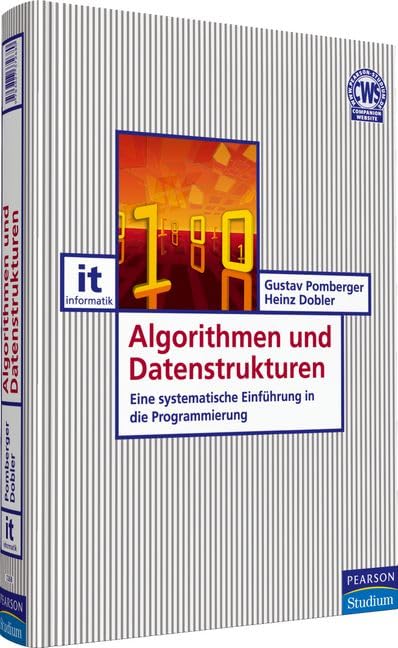
Algorithmen und Datenstrukturen: Eine systematische Einführung in die Programmierung von Gunter Saake, Kai-Uwe Sattler
Bei Amazon ansehenAffiliate-Link: Bei einem Kauf erhalten wir möglicherweise eine Provision.
Vorteile und Nachteile
Vorteile von Algorithmen-Analyse
- Performance-Vorhersage: Abschätzung der Laufzeit
- Algorithmus-Wahl: Richtiges Verfahren auswählen
- Optimierung: Flaschenhälse identifizieren
- Skalierbarkeit: Wachstumsverhalten verstehen
Nachteile
- Theoretische Annahmen: Ignoriert Konstanten
- Praktische Unterschiede: Hardware-Einflüsse
- Komplexität: Mathematische Analyse aufwändig
- Over-Engineering: Vorzeitige Optimierung
Häufige Prüfungsfragen
-
Was ist der Unterschied zwischen Best, Average und Worst Case? Best Case: optimaler Pfad, Average Case: erwartete Performance, Worst Case: schlechtester Pfad.
-
Warum ist Binary Search O(log n) und nicht O(n)? Durch Halbierung des Suchbereichs bei jedem Schritt wird die Suche logarithmisch beschleunigt.
-
Wann verwendet man Insertion Sort statt Quick Sort? Bei kleinen Arrays oder fast sortierten Daten, wo Insertion Sort O(n) erreicht.
-
Was bedeutet In-place bei Sortieralgorithmen? Der Algorithmus sortiert ohne zusätzlichen Speicherplatz (O(1) Platz).